












On 28 April 2026, the InterPED project participated in the latest ASCEND Project Café, an online knowledge-sharing session dedicated to renewable energy sources, energy storage, and urban energy system integration.
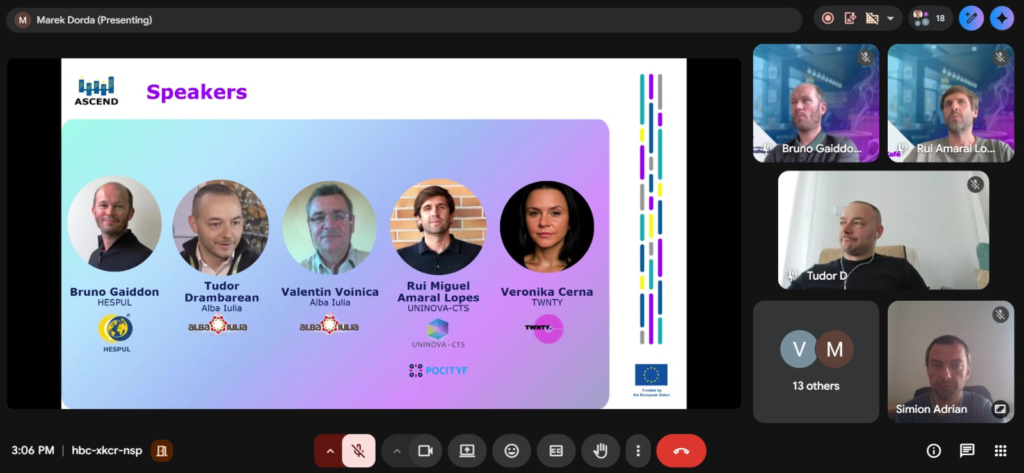
The webinar brought together representatives from cities, research organisations, and EU-funded projects to exchange practical experiences and discuss current challenges in the energy transition. The session featured contributions from HESPUL, the City of Alba Iulia, and the POCITYF project, represented by UNINOVA.
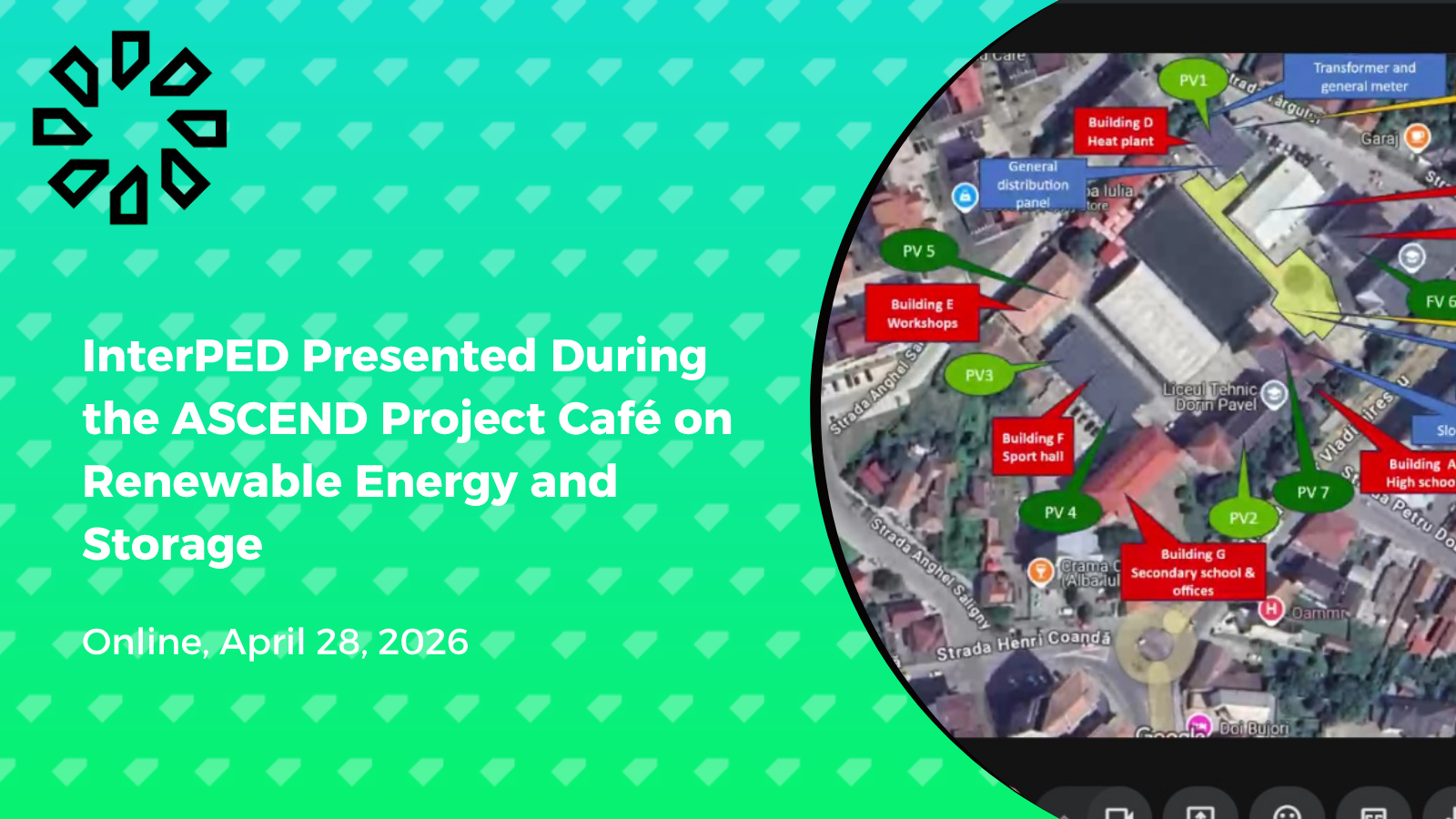
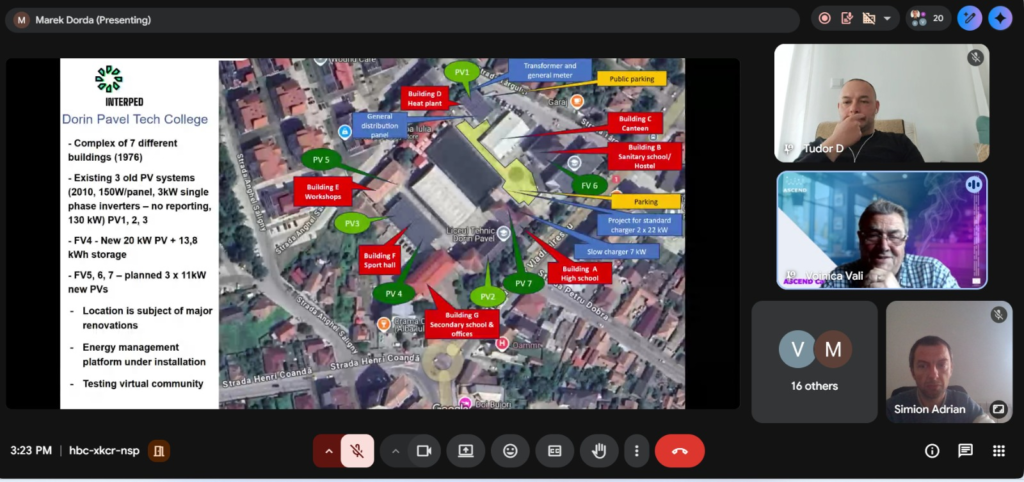
During the discussion-oriented Café format, InterPED partner Alba Iulia briefly presented the InterPED energy monitoring and management activities currently under implementation at the Dorin Pavel Technical College pilot site in Romania.
The presentation highlighted the ongoing development of an integrated energy management ecosystem across a complex of educational buildings, including:
- existing and planned photovoltaic installations,
- battery storage systems,
- EV charging infrastructure,
- and the deployment of an energy management platform supporting local energy optimisation and virtual community testing.
The InterPED pilot demonstrates how Positive Energy District concepts can be explored in real urban environments through the integration of renewable energy generation, storage, and smart energy management solutions.
The ASCEND Café also explored broader topics related to:
- renewable energy integration in urban environments,
- interoperability between systems,
- practical implementation challenges,
- and the role of energy storage in supporting resilient and climate-neutral cities.
InterPED was pleased to contribute to this exchange and strengthen collaboration with sister projects and urban stakeholders working towards sustainable and citizen-centered energy systems across Europe.