










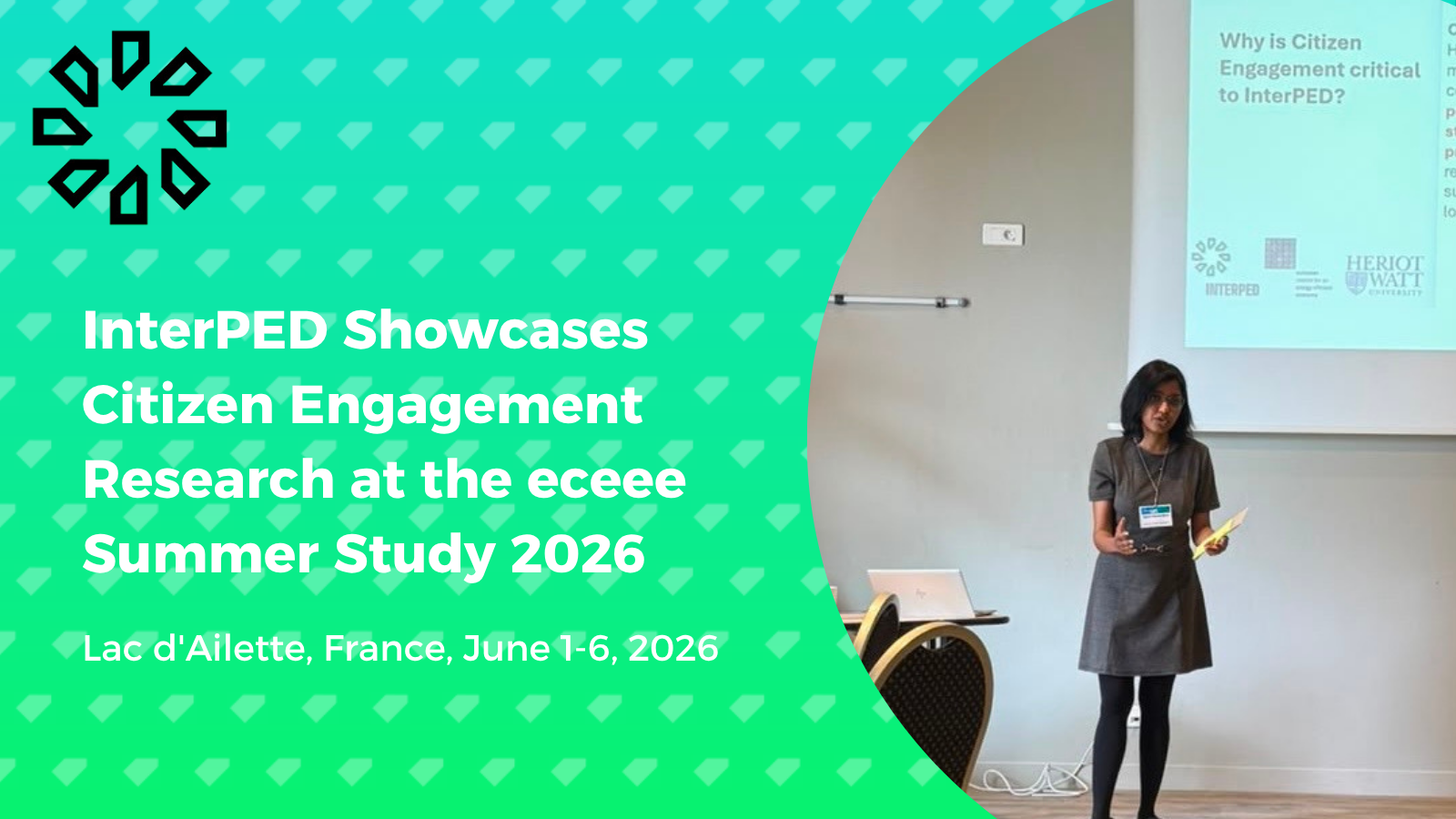
The transition to climate-neutral cities depends not only on innovative technologies, but also on the active participation of citizens. As Positive Energy Districts (PEDs) become more widespread across Europe, understanding how people engage with local energy systems is becoming just as important as developing the technologies that power them.
This was the focus of InterPED’s contribution to the eceee Summer Study 2026, one of Europe’s leading conferences on energy efficiency, where researchers from Heriot-Watt University shared their latest work on citizen engagement and energy literacy within energy communities.
Europe’s Leading Forum for Energy Efficiency
Held from 1–6 June 2026 at Center Parcs, Lac d’Ailette, France, the eceee Summer Study brought together researchers, policymakers, industry representatives, and practitioners working to advance energy efficiency and demand reduction across Europe.
Under the theme “Efficiency: Powering On!”, this year’s conference explored how energy efficiency can contribute to addressing climate change, strengthening energy security, and supporting Europe’s green and digital transitions.
The event covered a broad range of topics, including energy policy, sustainable communities, buildings, mobility, industry, and citizen empowerment, providing an ideal platform for exchanging evidence-based research and practical experiences.
Putting Citizens at the Centre of Energy Communities
As part of Panel 5: Sustainable Communities, Dr Andrew Peacock and Dr Tasniva Rahman from Heriot-Watt University presented research developed within the InterPED project focusing on citizen engagement in energy communities.
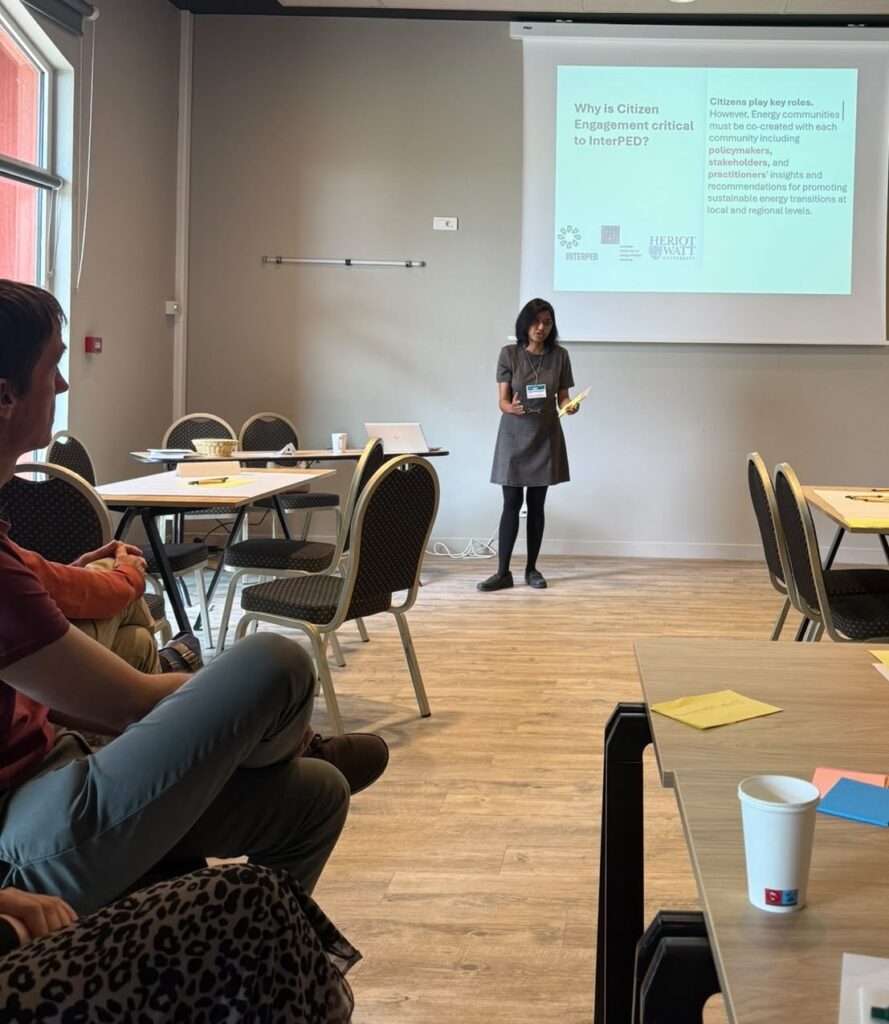
Their presentation introduced the project’s methodological framework for understanding and supporting citizen participation within Positive Energy Districts. Rather than viewing citizens as passive energy consumers, the research explores how local communities can actively contribute to energy flexibility, collaborative decision-making, and the wider energy transition.
The work recognises that successful Positive Energy Districts depend not only on smart technologies and renewable energy systems, but also on building trust, improving energy literacy, and creating opportunities for meaningful community participation.
Rethinking Citizen Engagement
Alongside the conference presentation, the InterPED team submitted a peer-reviewed paper entitled:
“Rethinking Citizen Engagement in Energy Communities.”
The paper examines new approaches to engaging citizens in local energy systems and contributes to the growing discussion on how behavioural, social, and technological dimensions can be better integrated within Positive Energy Districts.
By sharing these findings through the eceee Summer Study proceedings, InterPED contributes to the wider European knowledge base on energy communities and citizen-centred energy transitions.
Co-Creating an Energy Literacy Framework
In addition to presenting their research, the Heriot-Watt University team facilitated an interactive workshop entitled:
“Co-Creating an Energy Literacy Framework.”
The workshop brought together energy experts from across Europe to explore how energy literacy can empower citizens to better understand energy consumption, flexibility, renewable energy, and local energy systems.
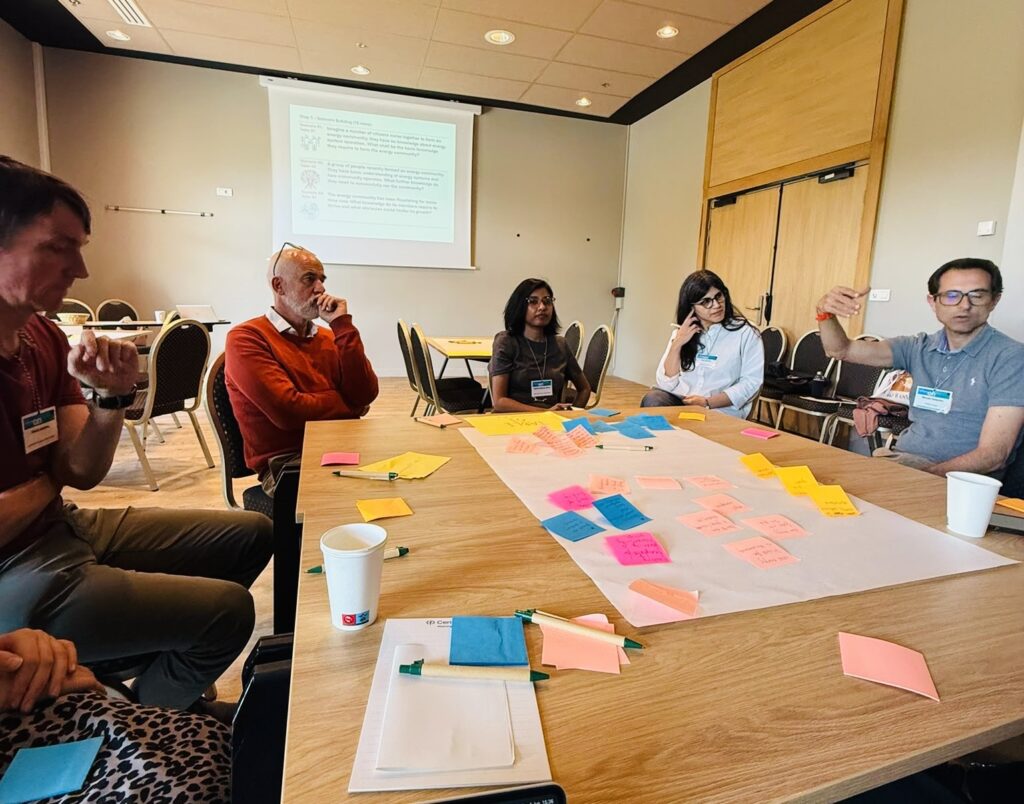
Participants exchanged experiences, discussed practical approaches for improving public understanding of energy issues, and identified opportunities for strengthening community participation within future Positive Energy Districts.
The collaborative format generated valuable discussions and positive feedback from both researchers and practitioners, highlighting the growing recognition that citizen engagement must be embedded throughout the design and implementation of sustainable energy systems.
Supporting the Human Dimension of Positive Energy Districts
While much of InterPED focuses on digital platforms, forecasting services, interoperability, and cross-vector energy management, the project also recognises that technology alone cannot deliver the energy transition.
Creating successful Positive Energy Districts requires informed citizens, trusted governance models, and collaborative approaches that encourage communities to actively participate in local energy systems.
The research presented at the eceee Summer Study reflects this broader vision by exploring how citizen engagement and energy literacy can complement technological innovation, helping communities become active contributors to more flexible, resilient, and sustainable energy systems.
As InterPED continues to develop and validate its solutions across four European pilot sites, integrating social innovation alongside technical innovation remains a key element of the project’s approach.