














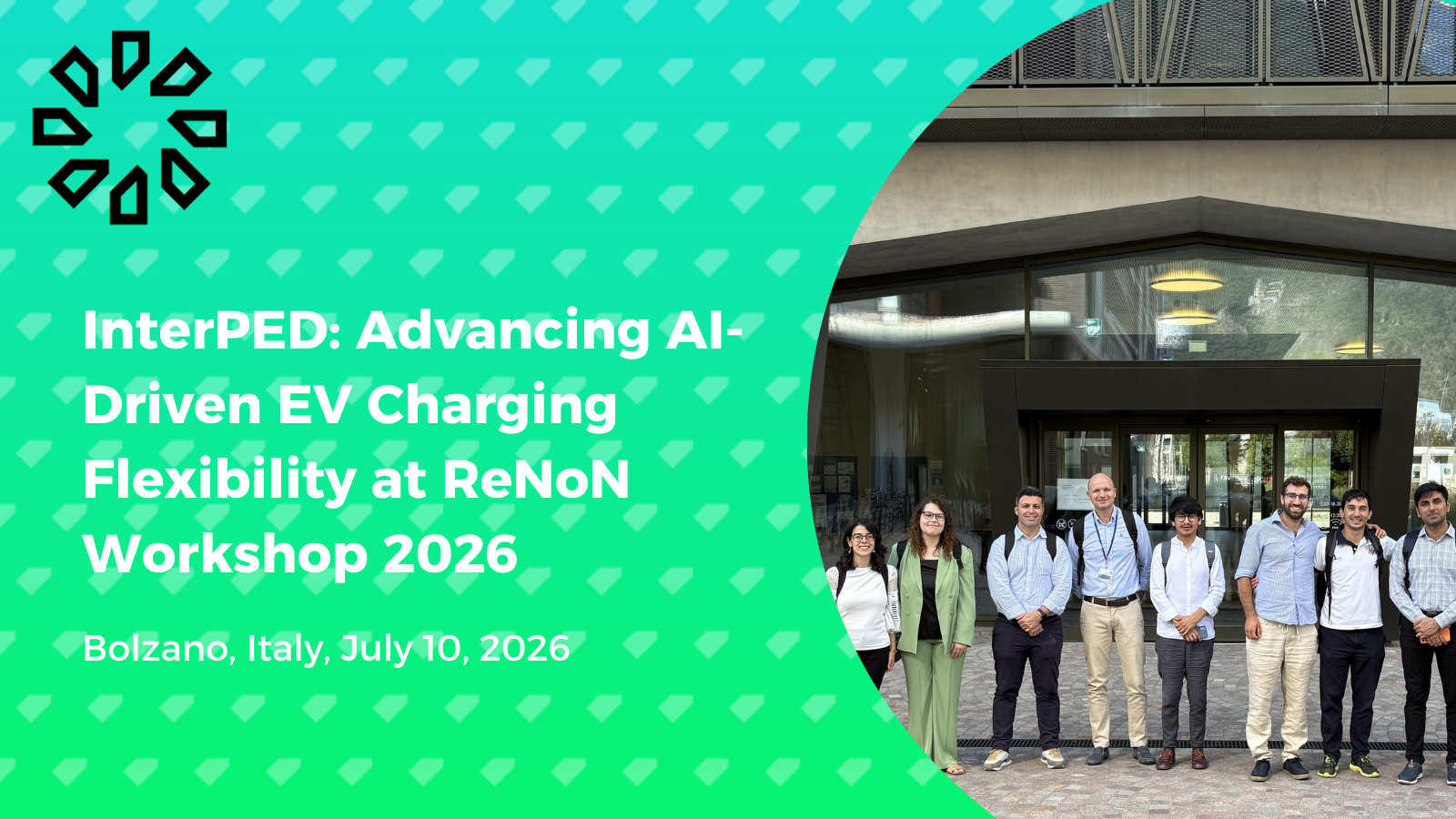
On 10 July 2026, InterPED partner SUPSI participated in the ReNoN Workshop 2026: “Optimization, Energy Planning and Integration of Multi-Energy Systems for Decarbonization Pathways”, hosted by the Faculty of Engineering of the Free University of Bozen-Bolzano (unibz) at NOI Techpark in Bolzano, Italy.
The workshop brought together researchers, industry experts, and practitioners from across Europe to discuss advanced methodologies and optimisation strategies for integrating electricity, heating, mobility, hydrogen, energy storage, and other interconnected infrastructures in support of Europe’s transition towards climate neutrality.
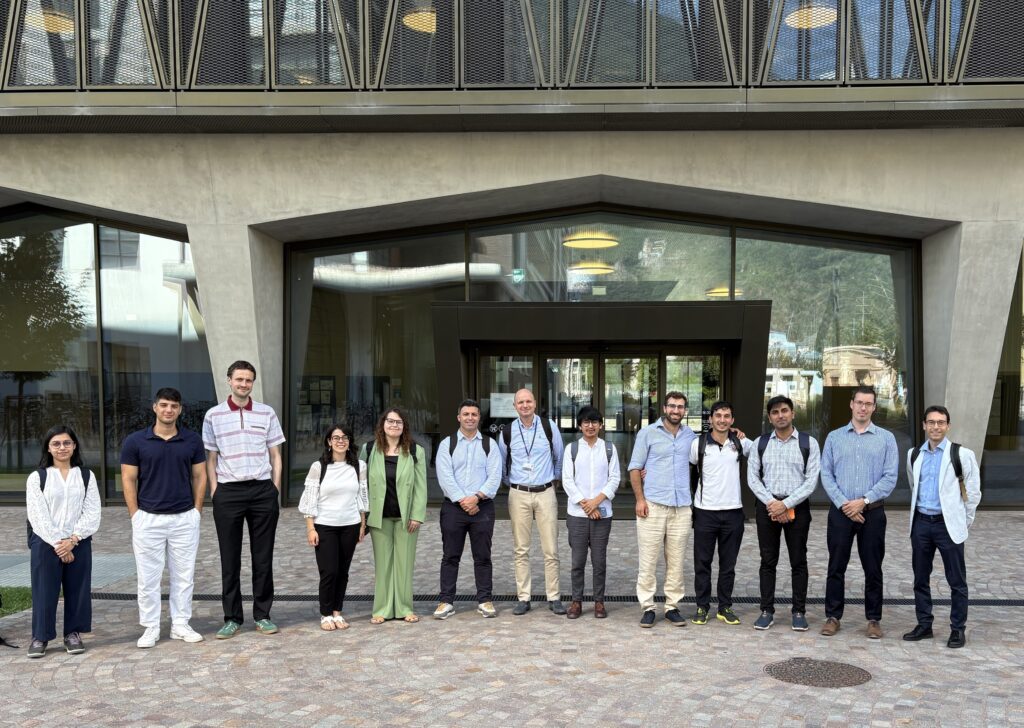
Representing InterPED, Dr. Manuel Perez presented the paper “From Algorithm to Deployment: A Multi-Agent EV Orchestrator for Public Charging Flexibility”, showcasing research developed within the project on intelligent electric vehicle charging management.
The presentation introduced InterPED’s EV Orchestrator, an AI-driven service designed to optimise public EV charging within Positive Energy Districts (PEDs). Using Multi-Agent Reinforcement Learning (MARL), the solution coordinates charging decisions under uncertainty while balancing three key objectives:
- maintaining user satisfaction by ensuring vehicles receive the required charge;
- reducing peak electricity demand on the local grid;
- increasing charging during periods of lower electricity demand to improve grid flexibility.
The solution forms part of the broader InterPED interoperability platform, where electricity, heating, mobility, forecasting, and flexibility services work together to support the operation of Positive Energy Districts. The presentation also demonstrated how the orchestrator is being prepared for deployment in the project’s pilot sites in Capriasca (Switzerland) and Findhorn (Scotland), bringing research closer to real-world implementation.
Participation in the ReNoN Workshop provided an excellent opportunity to exchange knowledge with experts working on integrated multi-energy systems, explore future collaboration opportunities, and demonstrate how AI-enabled flexibility services can contribute to more resilient and sustainable energy communities.