














Positive Energy Districts (PEDs) are increasingly recognised as a cornerstone of Europe’s energy transition. By combining renewable energy generation, efficient buildings, smart infrastructure, and community participation at district scale, PEDs can help cities achieve climate neutrality while improving local energy resilience.
However, while the concept is gaining traction across Europe, scaling PEDs beyond pilot initiatives remains a complex challenge. Technical solutions alone are not enough. The success of PED deployment depends on addressing systemic barriers related to governance, financing, institutional capacity, and coordination.
This blog builds on insights from Deliverable D3.1 – Pilot Operational Characterization and Global Challenges, publicly available on Zenodo. The deliverable explores the broader policy and regulatory landscape surrounding PED deployment across Europe and highlights the structural conditions shaping implementation.
Beyond Technology: The Systemic Nature of PED Deployment
Positive Energy Districts require the integration of multiple sectors, including electricity, heating, cooling, mobility, and urban planning. Unlike traditional energy infrastructure projects, PEDs operate at the intersection of energy systems, local governance, financial structures, and citizen participation.
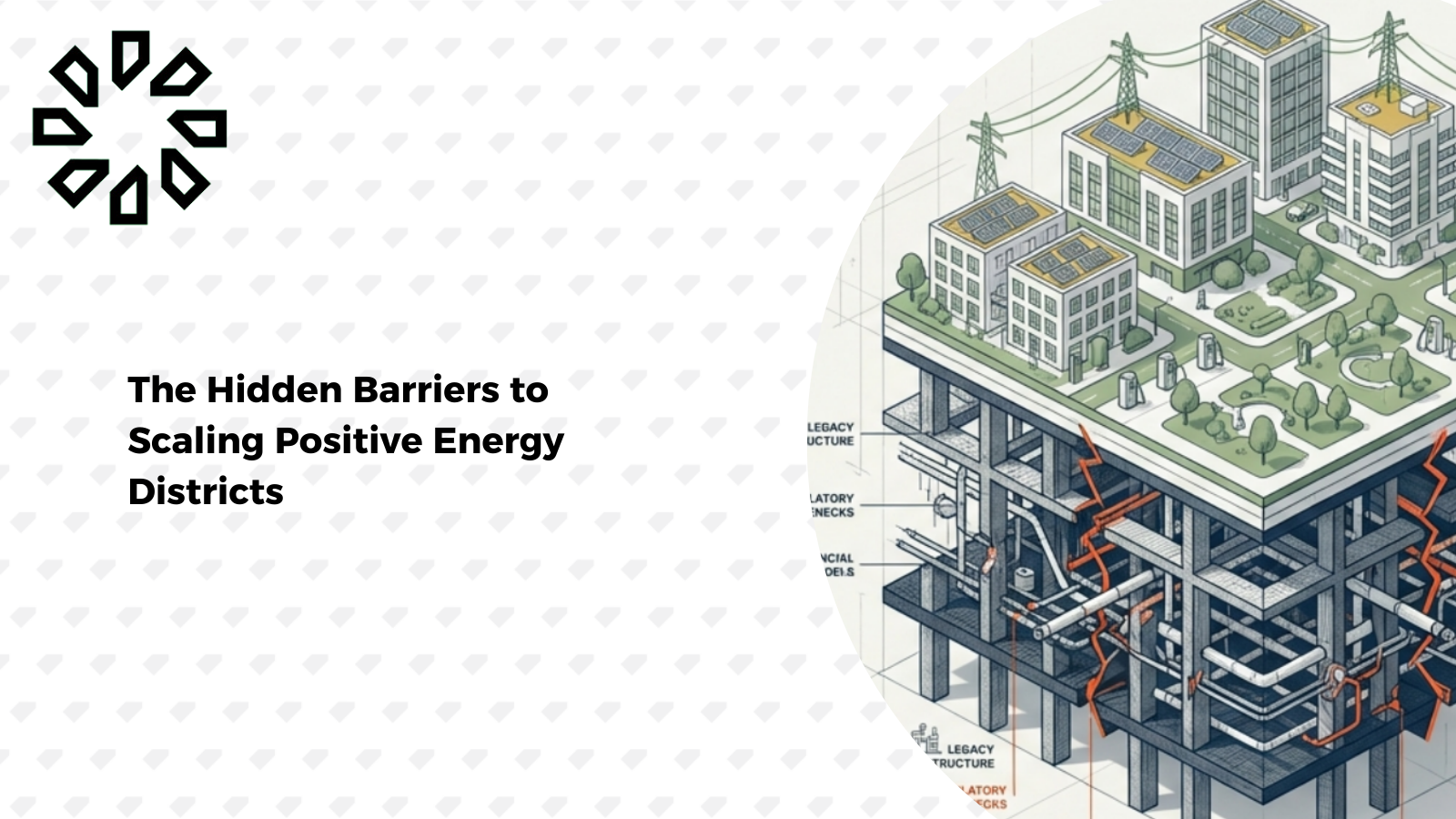
This multi-dimensional nature introduces a range of structural challenges that often remain hidden behind technological discussions. Addressing these barriers is essential for moving from isolated pilot projects toward large-scale replication across European cities.
Institutional Fragmentation
One of the most significant barriers to PED implementation is the fragmentation of institutional responsibilities.
Energy systems, urban planning, building regulations, and mobility infrastructure are typically managed by different authorities and regulatory frameworks. In many cities, responsibilities are distributed across municipal departments, national regulators, grid operators, and private actors.
This fragmented governance structure can slow decision-making, complicate project implementation, and create uncertainty about roles and responsibilities. For PED initiatives that require coordinated action across sectors, establishing clear governance structures becomes essential.
Successful projects, therefore, depend not only on technological innovation but also on governance models that enable collaboration between municipalities, energy utilities, research organisations, and community stakeholders.
Financing Complexity
PED projects also face significant financial challenges. Developing district-scale energy systems requires substantial upfront investment in renewable generation, energy storage, digital infrastructure, and building retrofits.
However, the financial benefits of these investments are often distributed across different actors and over long time horizons. For example, investments in energy efficiency may reduce energy bills for residents, while grid flexibility benefits system operators.
This fragmented distribution of costs and benefits makes it difficult to design viable financing models. Traditional funding structures are not always well-suited to integrated district-scale solutions that combine infrastructure, digital platforms, and community engagement.
As a result, PED development often requires innovative financing mechanisms, combining public funding, private investment, and community participation models such as energy communities or cooperative ownership structures.
Capacity Constraints in Cities
Many European municipalities recognise the potential of Positive Energy Districts but face limited institutional capacity to implement them.
City administrations may lack the technical expertise, human resources, or organisational structures required to coordinate complex multi-sector energy projects. PED development often requires expertise in energy modelling, regulatory frameworks, digital platforms, and stakeholder engagement.
Smaller municipalities, in particular, may struggle to mobilise the resources needed to design and manage such initiatives.
Capacity-building efforts, knowledge-sharing networks, and collaboration with research institutions therefore play a crucial role in supporting cities during the transition from planning to implementation.
Coordination Across Stakeholders
Perhaps the most complex challenge lies in coordinating the large number of actors involved in PED development.
Positive Energy Districts require collaboration between urban planners, technology providers, energy utilities, policymakers, citizens, and financial institutions. Each of these actors operates under different incentives, regulatory constraints, and operational priorities.
Without effective coordination mechanisms, projects risk becoming fragmented or stalled during implementation.
Successful PED initiatives often rely on strong governance frameworks that facilitate dialogue, align incentives, and ensure that stakeholders remain engaged throughout the project lifecycle.
Toward Scalable PED Deployment
Addressing these systemic barriers is essential if Positive Energy Districts are to move beyond experimental pilots and become a mainstream approach to sustainable urban development.
Technology will continue to play a critical role, particularly through digital energy platforms, interoperability frameworks, and advanced modelling tools. However, technological innovation must be complemented by institutional innovation, financial experimentation, and new governance models capable of managing complex urban energy systems.
Projects such as InterPED contribute to this transition by exploring how PED concepts can be adapted to different urban contexts, governance environments, and energy infrastructures.
Readers interested in the policy and regulatory foundations behind PED deployment can explore Deliverable D3.1 – Pilot Operational Characterization and Global Challenges, publicly available on Zenodo, which offers a structured overview of these conditions and highlights the systemic dimensions that must be addressed alongside technology.