








How can buildings evolve from passive energy consumers into active participants in the energy system? And how can citizens be supported in understanding the increasingly complex energy decisions that come with this transition?
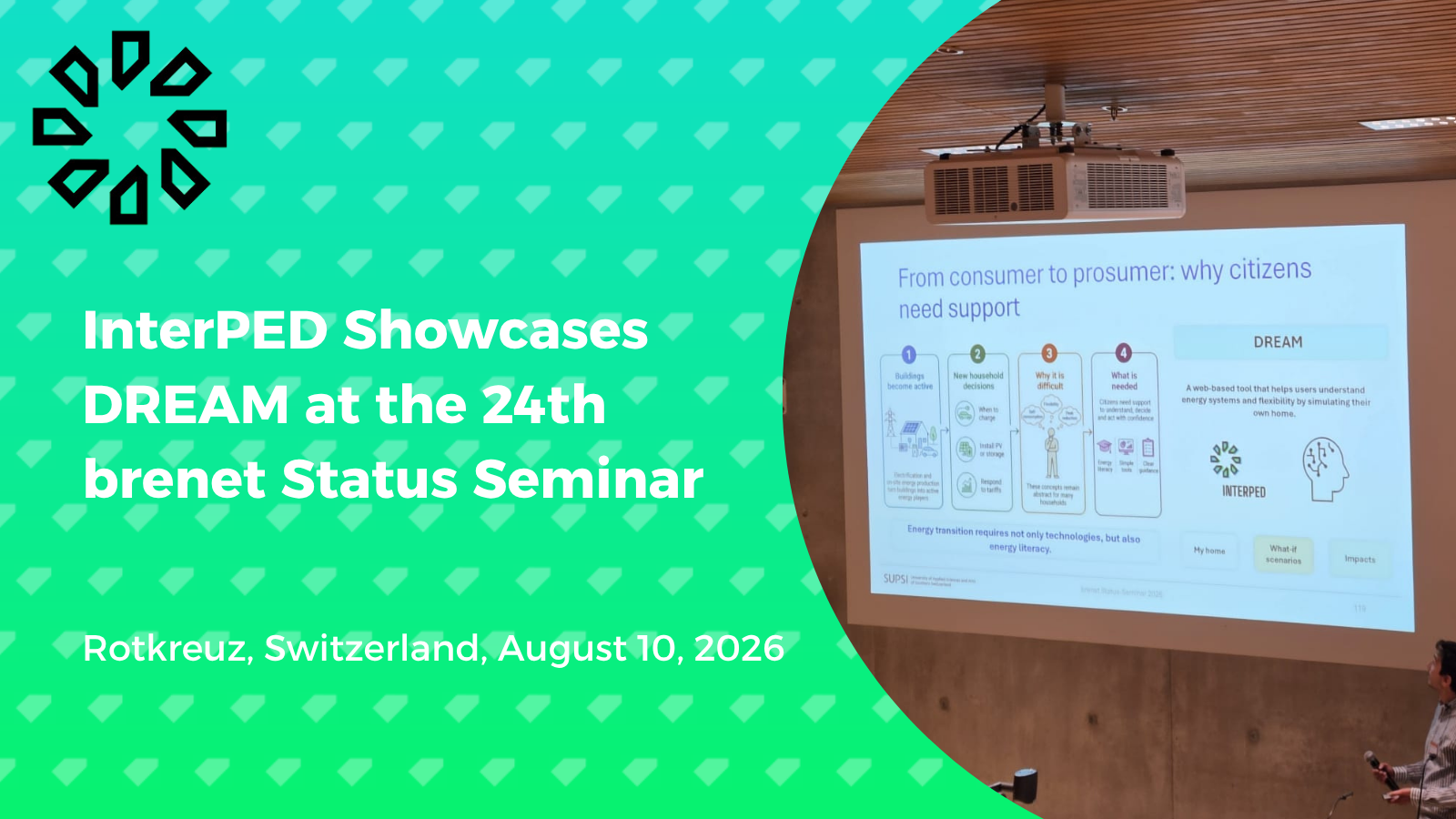
These questions were at the centre of the 24th brenet Status Seminar, held on 20 August 2026 in Rotkreuz, Switzerland, where InterPED partner SUPSI – University of Applied Sciences and Arts of Southern Switzerland presented DREAM, a web-based simulation tool developed within the InterPED project to support energy literacy and informed decision-making.
From Consumer to Prosumer
Under the theme “From Consumer to Prosumer – How Buildings Shape Switzerland’s Energy System,” the 24th brenet Status Seminar explored the changing role of buildings within a more decentralised, renewable and flexible energy system.
As renewable generation expands and the electrification of heating and mobility increases electricity demand, buildings are increasingly becoming more than places where energy is consumed. Through technologies such as photovoltaics, heat pumps, batteries, electric vehicles and smart controls, buildings can also generate, store and flexibly manage energy.
The seminar brought together experts from applied research, public administration, energy suppliers, industry, building ownership and planning from across Switzerland. Its programme combined keynote presentations, research contributions and 16 short pitches presenting emerging research approaches and practical results. More than 78 participants were registered on the event platform.
Bringing InterPED Research to the Swiss Energy Community
InterPED was represented by its Swiss partner SUPSI, with Manuel Antonio Perez Estevez, Raul Saez, Mohamed Boutaleb and Vasco Medici contributing to the work presented at the seminar.
Their contribution focused on a fundamental challenge accompanying the transition towards more active energy users: new technologies also bring new decisions for citizens.
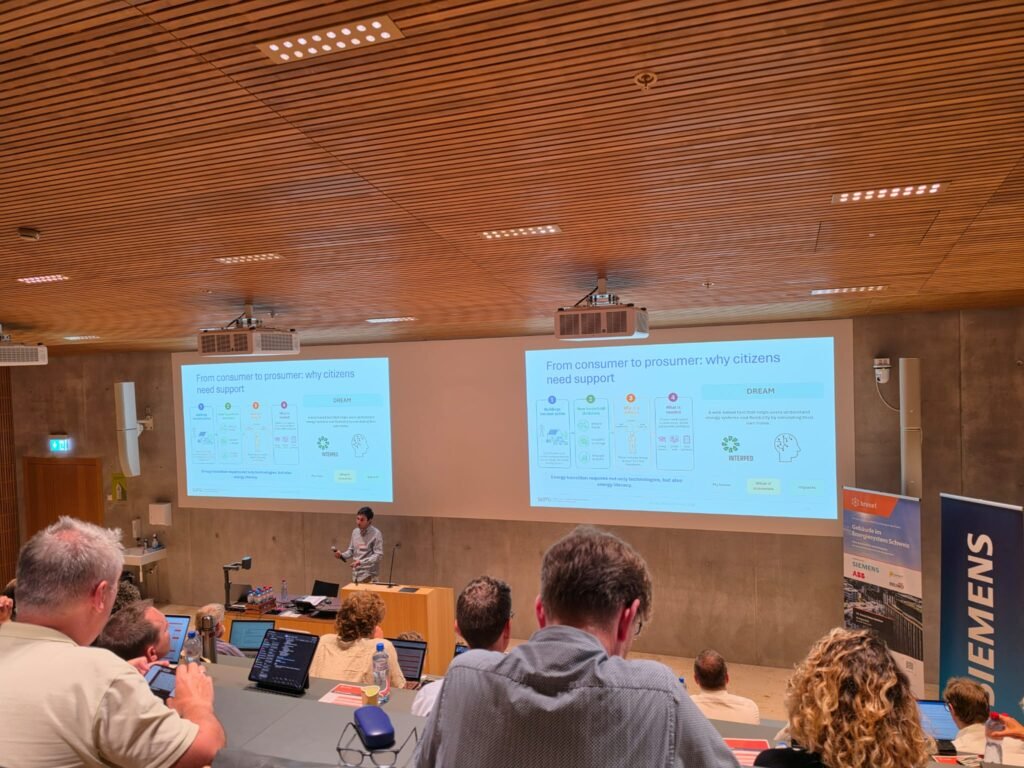
Households may increasingly need to decide when to charge an electric vehicle, whether to install photovoltaic panels or energy storage, how renovation measures could affect their consumption, or how responding to energy tariffs and flexibility signals could influence both their energy costs and the wider electricity system.
Understanding these interactions can be difficult without accessible information and practical tools.
This is where DREAM comes in.
DREAM: Helping Citizens Understand Their Energy Choices
Developed within InterPED, DREAM is a web-based simulation tool that helps users explore energy systems and flexibility through their own home and through intuitive “what-if” scenarios.
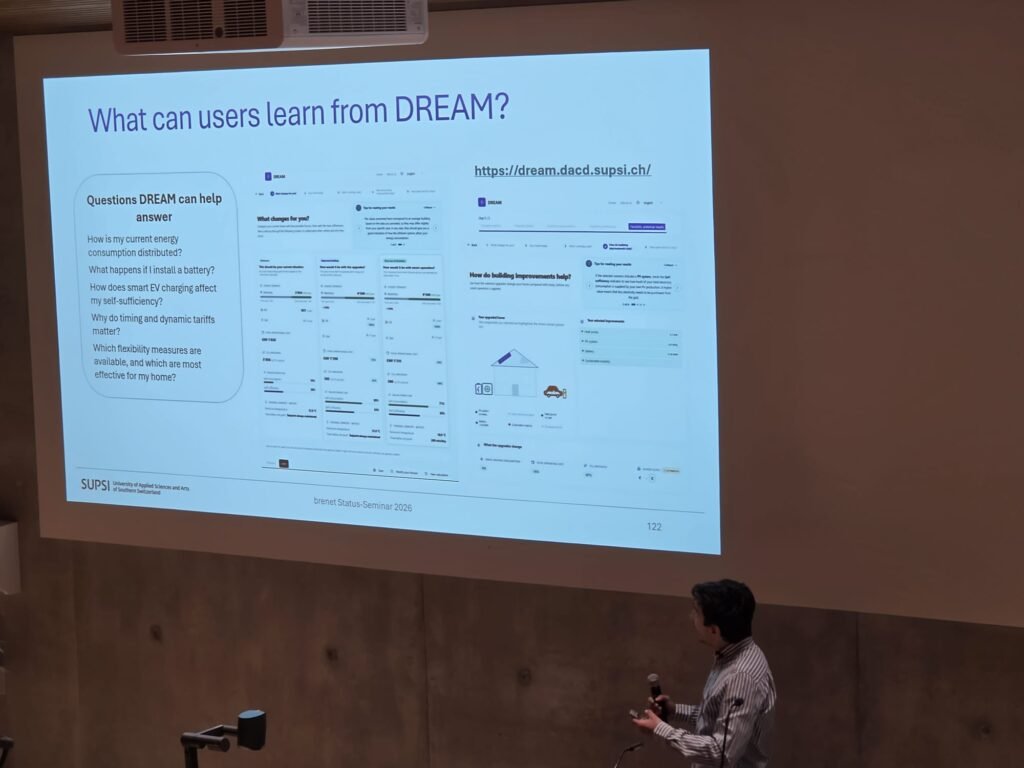
Rather than requiring users to understand complex energy models, the tool allows them to investigate how different technologies and decisions could affect the energy performance of a household.
Users can explore scenarios involving technologies and measures such as heat pumps, photovoltaic systems, EV charging, building renovation and smart control strategies, and understand their potential effects on indicators including energy consumption, costs, CO₂ emissions, self-consumption and peak electricity demand.
This creates a more tangible connection between individual decisions and their wider energy implications.
Why Energy Literacy Matters
One of the key messages presented at the seminar was simple: the energy transition requires not only new technologies, but also energy literacy.
As citizens gradually move from being consumers towards becoming prosumers who can produce, store and flexibly use energy, their role within the energy system becomes more complex.
Tools such as DREAM can help bridge the gap between increasingly sophisticated energy technologies and the people expected to interact with them. By allowing users to test scenarios and visualise possible impacts before making decisions, digital tools can support greater understanding, confidence and informed participation.
Importantly, DREAM has been developed through a co-design approach involving citizens and energy stakeholders, helping ensure that the tool responds not only to technical requirements but also to the information and usability needs of its intended users.
Connecting Citizen Choices with Positive Energy Districts
The brenet Status Seminar provided a valuable setting for connecting applied research with practice, bringing together Swiss universities, industry, energy providers and public-sector stakeholders. Discussions covered topics including energy flexibility, storage, sector coupling, heat pumps, neighbourhood solutions and multi-energy systems.
InterPED’s participation offered an opportunity to present DREAM to the Swiss energy community, exchange knowledge with experts working on the transformation of buildings and energy systems, and demonstrate how digital tools and energy literacy can support more active participation in the energy transition.