












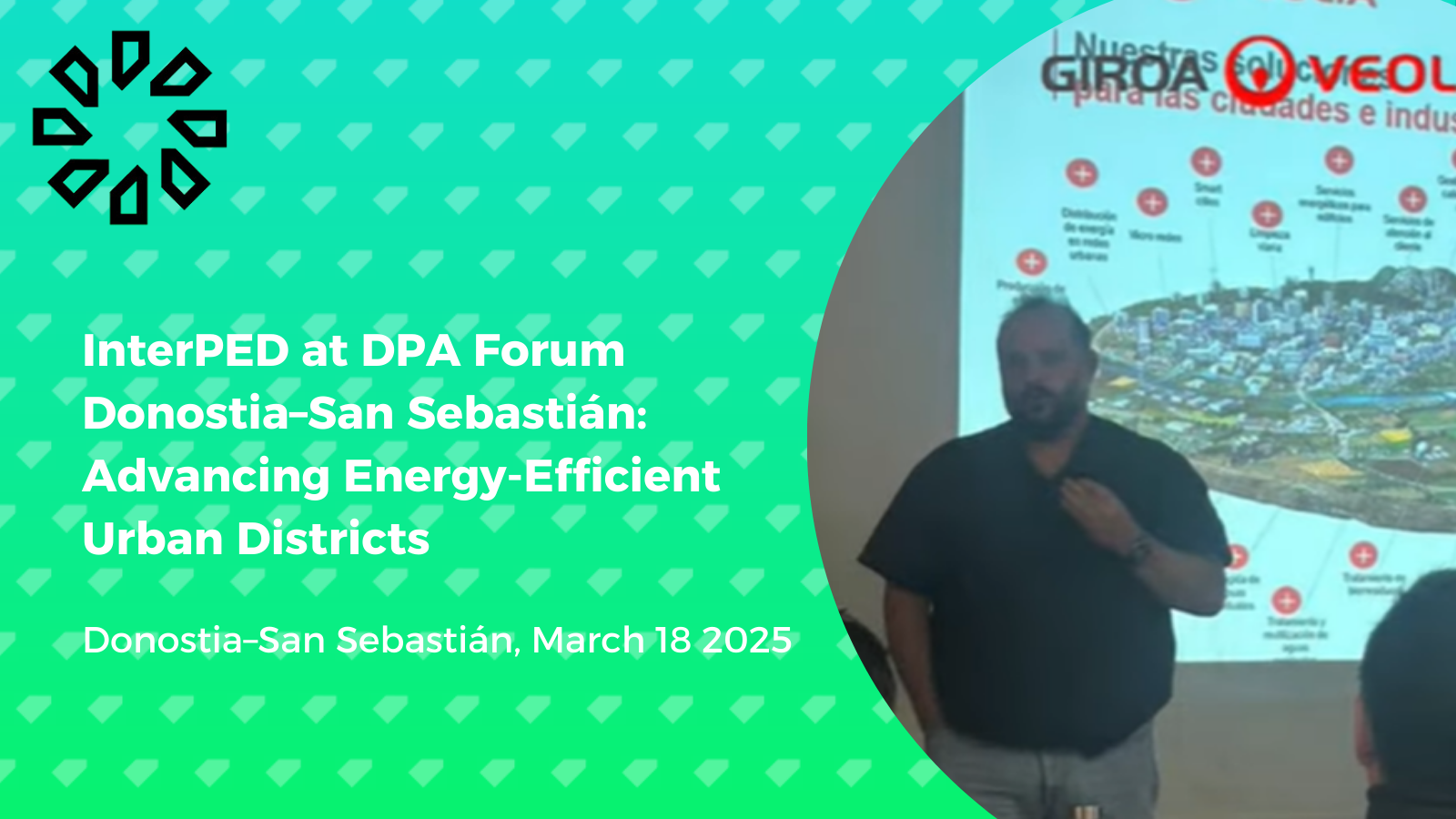
On 18 March, Donostia–San Sebastián hosted the DPA Forum Donostia–San Sebastián, an Innovation Forum dedicated to architecture, construction, rehabilitation, and energy efficiency. The event brought together professionals, companies, and innovators from across the construction sector to exchange practical solutions, technical knowledge, and forward-looking ideas applicable to everyday projects.
As an annual meeting point for the industry, the DPA Forum focuses on translating research and innovation into real-world applications. This year’s edition placed particular emphasis on energy efficiency and sustainable urban design, offering a valuable platform for presenting EU-funded R&D projects that are reshaping how cities are planned, built, and renovated.
InterPED Showcased as a Model for Positive Energy Neighbourhoods
During the forum, InterPED was presented by project partner Veolia, highlighting the project’s contribution to the transition from energy-efficient buildings to Positive Energy Districts. Within the architecture and urban design sessions, InterPED illustrated how district-level energy management can significantly enhance the overall energy performance of urban environments.
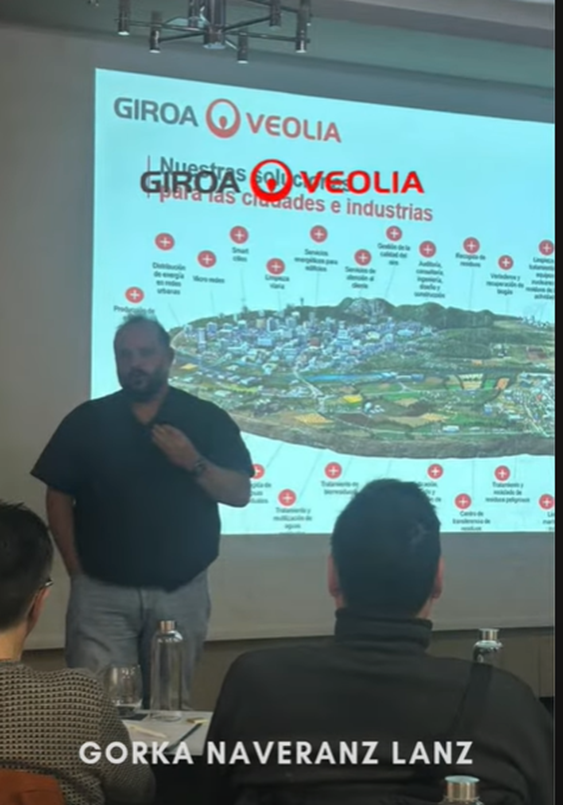
Rather than focusing on isolated buildings, InterPED promotes a holistic approach that integrates multiple energy vectors—such as electricity, heating, cooling, and mobility—at neighbourhood scale.
Interoperability as a Key Enabler
A central message of InterPED’s presentation was the importance of interoperable digital platforms in enabling this transition. The project demonstrates how different districts can manage diverse energy sources locally, while also exchanging energy and flexibility services across neighbourhoods through interoperable systems.
This approach supports more resilient and adaptable urban energy systems, allowing districts to respond dynamically to changing demand, renewable generation, and grid conditions. At the same time, it lays the groundwork for scalable solutions that can be replicated across cities and regions.
Bridging Innovation and Practice
The DPA Forum provided an ideal environment to connect research, industry, and practice, reinforcing the relevance of InterPED’s work for architects, engineers, planners, and energy professionals.
InterPED’s participation underlined a key takeaway of the event: the future of sustainable cities lies not only in better buildings, but in smarter, interconnected districts that combine technology, interoperability, and integrated energy planning.