








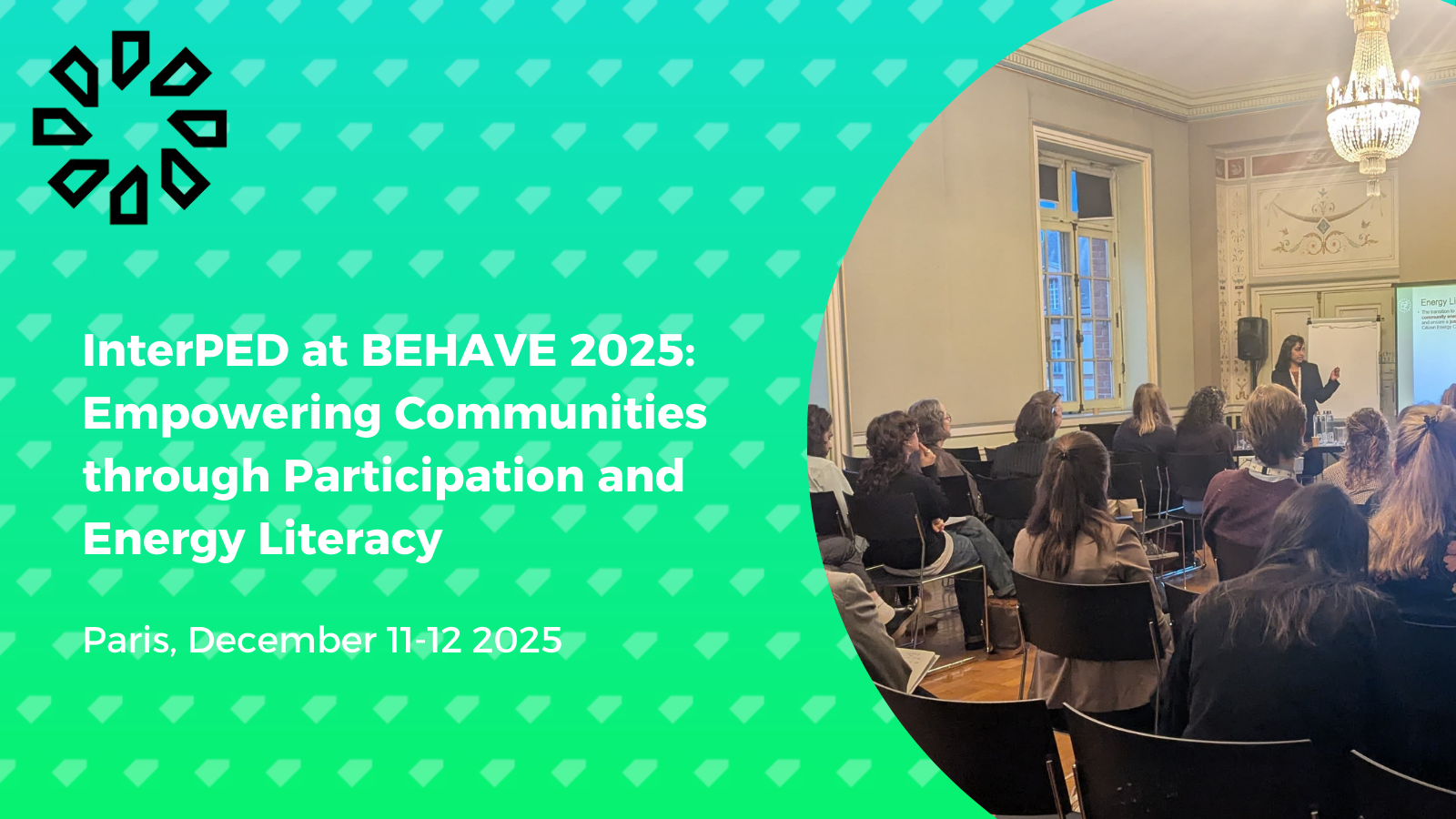
In December 2025, InterPED took part in BEHAVE 2025, the 8th European Conference on Behaviour & Energy Efficiency, held in Paris and organised by ADEME and the European Energy Network. As the flagship European event dedicated to behavioural insights in energy and climate policy, BEHAVE brought together policymakers, researchers, practitioners, and industry actors to explore how behaviour and lifestyle change can support a transition to carbon neutrality.
This year’s theme, “From energy efficiency to sufficiency: the need for a change in lifestyles to ensure a just transition to carbon neutrality,” resonated strongly with InterPED’s work on Positive Energy Districts and energy communities, where technological innovation must go hand in hand with social engagement, learning, and empowerment.
From Behaviour Change to Lifestyle Change
BEHAVE 2025 expanded the discussion beyond individual behaviour change to consider energy sufficiency, social practices, and lifestyle transformation across multiple sectors, including energy, housing, transport, food, and digital services. The conference highlighted a shared understanding: achieving climate neutrality requires not only more efficient technologies, but also new ways of living, organising communities, and sharing responsibility for energy use.
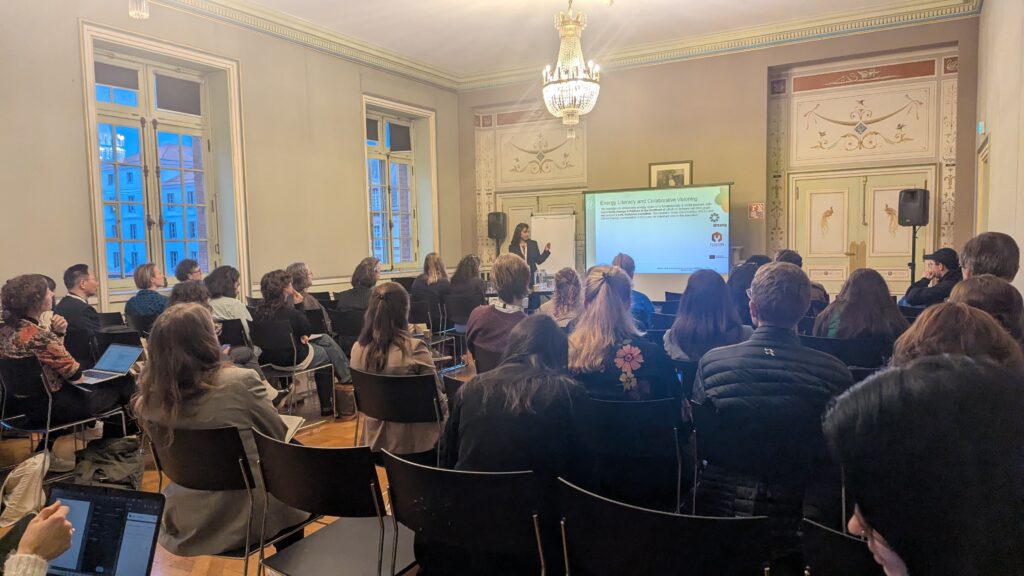
In this context, energy communities and citizen-led initiatives emerged as key enablers of change, not just as passive recipients of solutions, but as active participants in shaping energy systems that are fair, inclusive, and resilient.
InterPED’s Contribution: Empowering Communities through Participation
InterPED was represented at BEHAVE 2025 by Heriot-Watt University, which presented the paper:
“Empowering Communities through Participation: Collaborative Visioning and Literacy Building in Energy Communities.”
The presentation showcased InterPED’s approach to community engagement and participatory design, drawing on experiences from the project’s pilot sites, including the Findhorn Ecovillage. It emphasised how collaborative visioning, energy literacy building, and co-creation processes help communities move beyond abstract energy concepts and develop a shared understanding of their local energy systems.
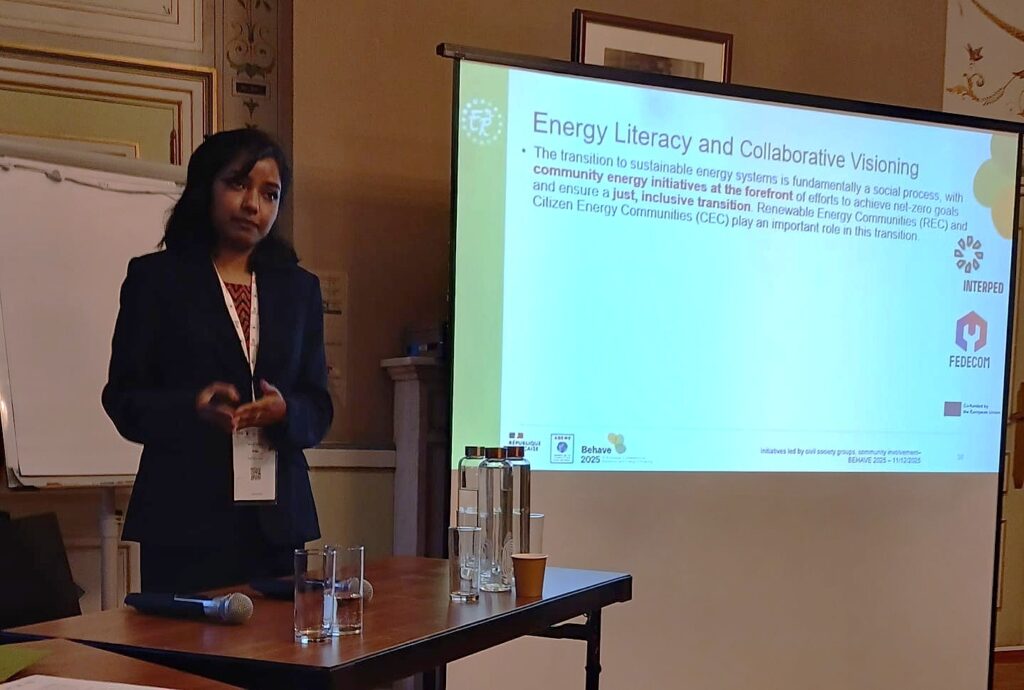
Rather than focusing solely on technical optimisation, InterPED’s work demonstrates how social processes, such as workshops, facilitated discussions, and hands-on interaction with digital tools, can foster ownership, trust, and long-term commitment to Positive Energy Districts.
Why Participation and Literacy Matter in Energy Communities
A key message from InterPED’s contribution was that participation is not a one-off activity, but a continuous process that supports learning and adaptation over time. Building energy literacy enables residents to better understand energy flows, flexibility, and trade-offs, empowering them to make informed decisions and actively engage with local energy solutions.
BEHAVE 2025 provided a valuable platform for dialogue between science and practice. InterPED’s participation contributed to this exchange by demonstrating how community-centred methods can be integrated into technically complex energy projects, ensuring that innovation remains grounded in people’s everyday realities.