











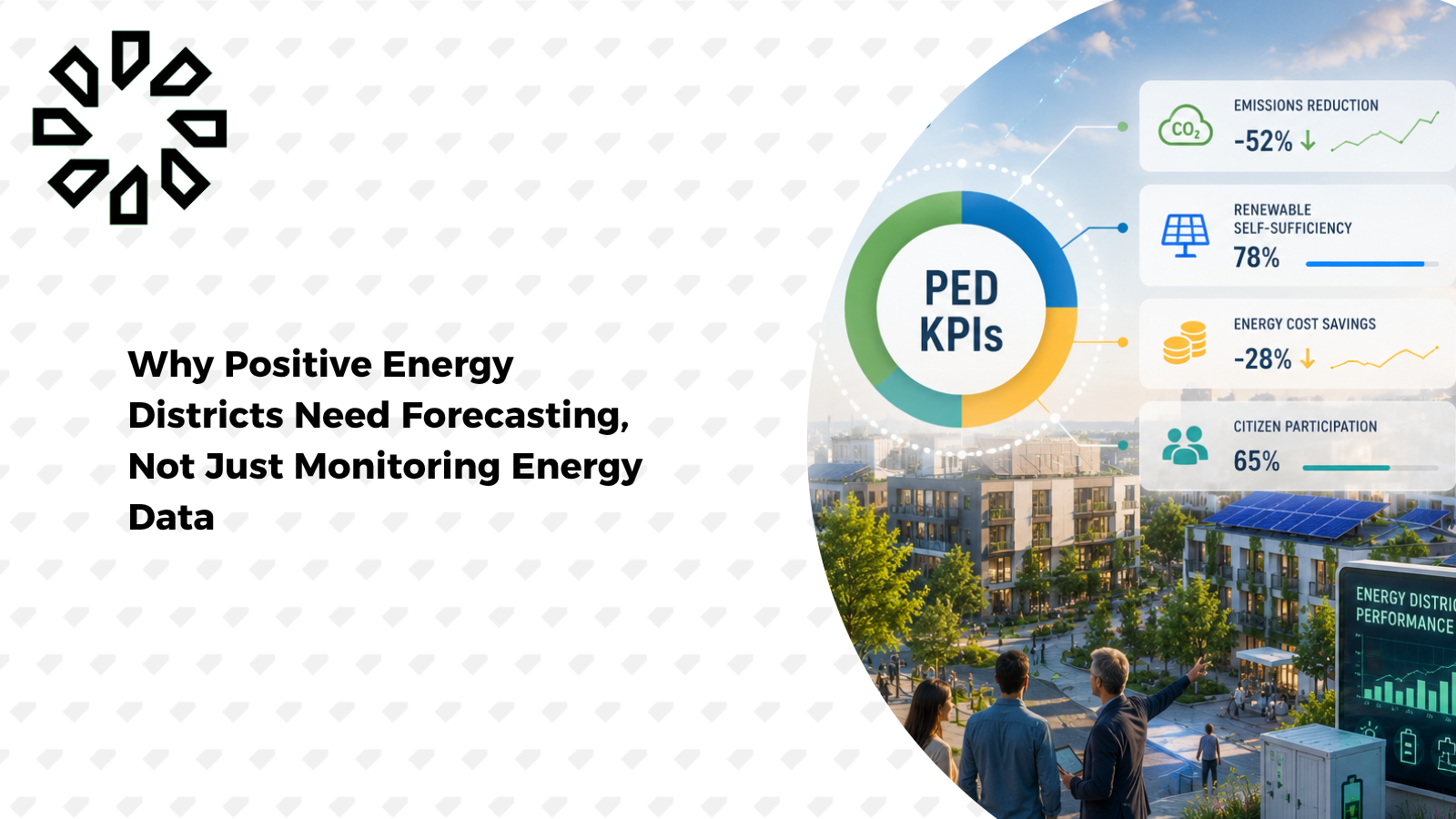
Positive Energy Districts (PEDs) are often described through ambitious objectives: generating renewable energy locally, reducing emissions, improving energy efficiency, supporting electric mobility, and engaging citizens in the energy transition.
However, once a PED moves from concept to implementation, a fundamental question emerges:
How do we know whether it is actually working?
Measuring the success of a Positive Energy District is not as straightforward as calculating how much renewable energy is produced. PEDs combine multiple technologies, stakeholders, and energy vectors, creating a complex ecosystem where technical performance, environmental impact, economic value, and citizen engagement are all interconnected.
This blog builds on insights from Deliverable D3.3 – Functional and Non-Functional Requirements, publicly available on Zenodo. The deliverable defines the evaluation framework used within InterPED to assess whether Positive Energy District solutions deliver meaningful benefits across technical, environmental, economic, and social dimensions.
Beyond Energy Production
When discussing Positive Energy Districts, renewable energy generation often receives most of the attention.
Solar panels, batteries, heat pumps, electric vehicles, and smart buildings are highly visible elements of the energy transition. Yet producing renewable energy alone does not guarantee that a district is operating efficiently or delivering value to its community.
For example, a district may generate large amounts of solar electricity during the day while still relying heavily on grid imports during peak demand periods. Similarly, advanced technologies may be installed without creating meaningful benefits for residents or encouraging participation in energy-related activities.
For this reason, evaluating a PED requires looking beyond energy production and considering how the entire system performs.
Success must be assessed through a combination of technical, environmental, economic, and social indicators that reflect the broader objectives of sustainable urban development.
Technical Performance Matters
One important aspect of PED evaluation is understanding how effectively energy systems operate.
Can renewable energy be used locally rather than exported? Are storage systems helping balance supply and demand? Is flexibility reducing stress on the electricity grid?
These questions help determine whether the district is making efficient use of its resources and whether different technologies are working together as intended.
Within projects such as InterPED, technical indicators provide insights into how energy flows across electricity, heating, cooling, storage, and mobility systems. They also help identify opportunities for optimisation and continuous improvement.
Environmental Benefits Must Be Demonstrated
Climate neutrality is one of the primary motivations behind Positive Energy Districts.
However, environmental benefits should not be assumed simply because renewable technologies have been deployed. They need to be measured and verified.
Evaluating emissions reductions, renewable energy utilisation, and overall environmental performance allows stakeholders to understand whether a PED is genuinely contributing to decarbonisation objectives.
This evidence is particularly important for cities seeking to align local initiatives with national climate targets and European Green Deal ambitions.
Understanding Economic Value
Long-term success also depends on financial viability.
Municipalities, building owners, investors, and citizens need confidence that PED solutions can generate economic benefits alongside environmental improvements.
This includes evaluating energy cost savings, operational efficiencies, investment performance, and the overall value created by flexibility services and local energy management strategies.
Without a clear understanding of economic outcomes, even technically successful projects may struggle to scale beyond pilot environments.
Measuring economic performance therefore, helps support replication and wider market adoption.
Putting Citizens at the Centre
One of the defining characteristics of Positive Energy Districts is their focus on people.
Unlike traditional infrastructure projects, PEDs rely on active participation from residents, energy communities, local organisations, and other stakeholders.
Citizen engagement influences how technologies are used, how flexibility services are adopted, and how communities respond to new energy models.
As a result, social factors play an important role in determining whether a district succeeds in practice.
Understanding participation levels, stakeholder involvement, and community engagement helps ensure that PED development remains aligned with local needs and expectations.
From Evaluation to Replication
Perhaps the most important reason for measuring performance is that it creates opportunities for learning.
Every Positive Energy District operates within a different urban, climatic, regulatory, and social context. What works in one city may not work in another.
By collecting consistent performance indicators, projects can compare results across locations, identify best practices, and better understand which solutions create the greatest impact.
This knowledge is essential for moving beyond isolated demonstrations and supporting wider replication across Europe.
Toward Evidence-Based Positive Energy Districts
As Positive Energy Districts continue to evolve, the focus is gradually shifting from technology deployment to measurable impact.
Cities and communities increasingly need evidence that energy solutions are delivering environmental benefits, supporting citizens, improving economic performance, and strengthening local energy resilience.
Projects such as InterPED contribute to this transition by developing structured frameworks that help stakeholders assess progress and make informed decisions.
After all, the success of a Positive Energy District is not defined by a single technology or indicator. It is determined by the combined value it creates for people, communities, and the wider energy system.
Readers interested in the evaluation framework behind InterPED can explore Deliverable D3.3 – Functional and Non-Functional Requirements, publicly available on Zenodo, which provides further insight into the indicators and requirements used to assess Positive Energy District performance.